On-Page SEO Services That Turn Your Existing Pages Into Your Best Lead Sources
We find why your pages are not working, then fix the content, structure, and search match. You get rankings on Google, visibility in AI answers, and more leads/enquiries.

A potential customer finds you on Google. They read the meta description. They do not click. It sounds like every other result on the page.
Or they do click. The headers make no logical sense. The content answers a different question than the one they searched. They leave in twelve seconds.
Or the page ranks, but Google’s AI Overview pulls from a competitor instead, because their content is structured to be extracted and yours is not.
Look. SEO has evolved, and now every page has to satisfy three systems: Google’s ranking algorithm, AI Overview extraction, and the LLMs (ChatGPT, Gemini, Claude, etc). Most on-page SEO optimizes for the first and ignores the other two. That is why your high-quality content page sits on page two while weaker competitors show up in AI answers. You’re losing a lot of potential leads & $$$.
That’s where you need Saiqic. Our on-page SEO services include the following;
What’s Included in our On-Page SEO Services
We optimize every on-page element that Google and AI systems (LLMs) care about, as well as every detail that a visitor wants to see before converting. Here’s what we offer:
Search Intent Match
We analyze what your ideal customer is searching for and what your page actually says. If there is a mismatch, we rewrite the content so the page ranks faster and holds those rankings.
Title Tags and Meta
Your title and description are what people see before they decide to click. If your pages are not getting any clicks, we rewrite the meta tags so your ideal customer clicks on the page.
Page Structure
We reorganize your headings so the page follows a clear order a reader can skim. That same clear order is what lets Google and AI tools pull answers straight from your page.
Brand Signals
We add code in the background that tells Google and AI tools who you are, what you do, and who you serve. Without it, they have nothing solid to work from.
Pages Competing With Each Other
When two of your pages target the same thing, Google cannot tell which one to show and ranks neither well. We merge them or give each a clear separate purpose.
Content Depth
We compare your page against what is already ranking. If yours leaves questions unanswered, we expand it until it is the most useful page on the topic for your buyer.
We’re Human. And So Is Our On-page SEO Services Pricing.
We love money (everyone does:), but more than that, we love to grow your business. You’ve already invested in your website, and we care for your money. So choose what you need right now.
$365 one-time
For up to 20 pages.
Custom Pricing
Best for monthly or sites with 20+ pages
Let’s Talk About The Results, Shall We?
We could fill this page with fancy charts and industry jargon. But we believe in Show, Don’t Tell. Here’s what happened when we rolled up our sleeves for some of our favorite clients:
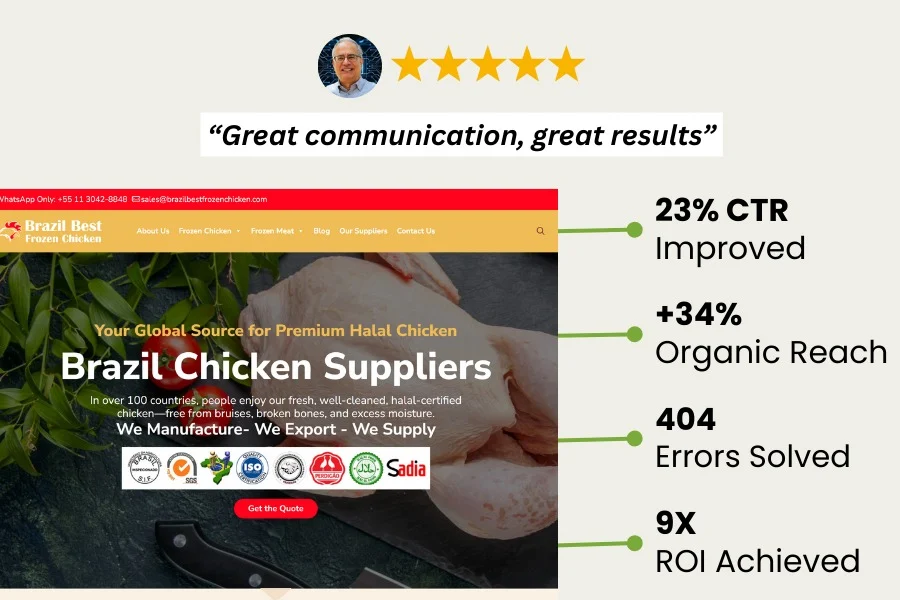
We brought a dead B2B website back to life
- CTR improved +23%
- Organic reach +34%
- 404 errors Solved
- ROI achieved 9x
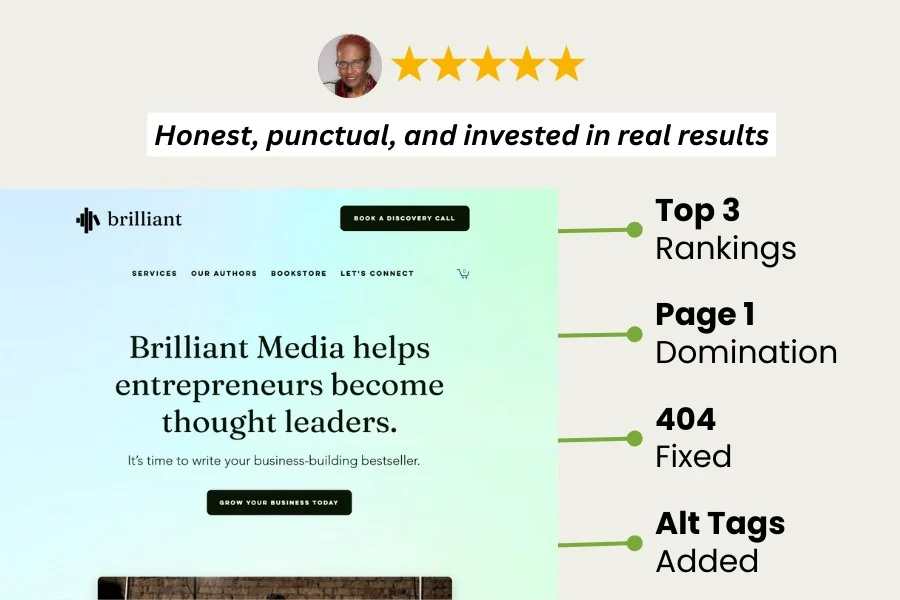
We took a thought leader from page 5 to Google’s Page #01
- Rankings Top 3
- Page 1 Domination
- 404s Fixed
- Alt tags Added
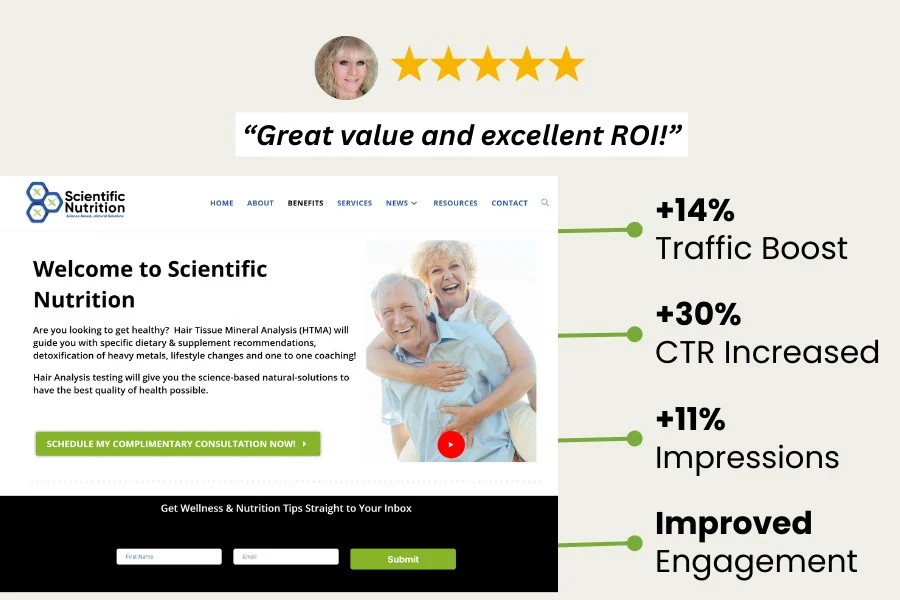
We increased traffic by 14% via on-page & tech SEO
- Traffic boost +14%
- CTR increased +30%
- Impressions +11%
- Engagement Improved
Our on-page SEO services usually move your rankings up within 90 days. If not we keep working for free or refund your money (never happened, btw)
Why You Should Choose Saiqic For On-page SEO Services
We love to win our customers’ trust. And here’s how we do it.
Human Diagnosis, Not Tool Output
We do not run your site through a tool and send you the export. An SEO expert reviews every page you want to rank, identifies the issues, and builds the plan from there.
Small Team, Selective About Clients
We are a small, experienced team, so we only take on what we can properly deliver. Expert writers work on your pages. You’ll get a dedicated writer for your site.
Ranking Movement Within 90 Days
You will see your pages moving up within 90 days, with enquiries following as those rankings hold. If not we keep working at no cost until it does.
Full Transparency on Every Change
You get clear reporting on every page we touch, what we changed, and what it did to your rankings and traffic. Ask us anything at any point, and you get a straight answer.
Are You A Saiqic Fit For On-Page SEO Services?
We can 100% help you if;
Your Pages Are Dead
You search the things you should be showing up for and find nothing. Not on Google, not in ChatGPT. The pages are published; they are just not being seen.
No AI Search Appearance
Your pages get rankings on Google, but ask AI the same question and your name never comes up. Competitors below you are the ones getting mentioned.
Traffic Comes, Nobody Converts
People are finding you and visiting the page. They read a bit, then leave without calling or filling anything in. The visibility is there, the enquiries are not.
Does any of the above issue rings a bell? We can help.
What Broken & Dead Pages Are Costing You
Leaving these pages as they are is not a wise choice. Every month they stay broken, it costs you something. Here is what.
You Already Paid for This
You have already paid for the writing, the design, and the build. That money is sitting in pages nobody sees. Fixing them costs far less than starting over with new content.
Competitors Get Further Ahead
Every month your pages stay stuck, someone else is climbing. Rankings compound, so the gap you could close in weeks today takes months once they have held those positions longer.
Your Best Pages Stay Hidden
Your best work is often on the pages performing worst. The expertise is there, the offer is strong, and none of it reaches the people who were looking for exactly that.
Your Potential Buyers Are Choosing Your Competitors
When someone asks ChatGPT for a recommendation in your category, an answer comes back with or without you. If you are not in it, you never even knew the conversation happened.
What We Need From You To Perform High-Level On-Page SEO for Your Site
To optimize your pages effectively and build the on-page signals that move rankings, we need four things:
Our On-page SEO-Services Process
You deserve to know exactly what you’re paying for. Here’s our proven process:
Full On-Page Audit
We audit every target page for intent, content quality, header structure, entity signals, etc., then prioritize what moves rankings first.
Intent Mapping
We map each keyword to its precise intent and define the format and depth that the page needs to rank.
Competitive Analysis
We analyze what ranks and what AI Overviews cite for your queries, then pinpoint exactly which signals your pages lack.
Implementation
We implement the fixes in a prioritized order. Every change is documented with the reasoning behind it.
Tracking
We track rankings, click-through rate, and traffic per page. We analyze what’s working and what we need to iterate.
Ongoing Optimization
The search behavior of your ideal customer keeps evolving and shifting. SO we monitor everything.
Tell Us About Your On-page SEO Project
This form will take your one minute and we will send you a custom quote for your project in under 24 hours.
You Might Have These Questions Related To Our On-page SEO services
For competitive terms, on-page SEO is necessary but not sufficient on its own. It works in combination with domain authority and backlinks. What we can tell you honestly is that broken on-page signals suppress rankings regardless of how strong your off-page profile is. Fixing them removes the ceiling on what your existing authority can achieve.
It depends on the quality and the gap between current content and what is ranking. Strong content that needs structural optimization gets adjusted. Content with a significant depth or intent gap gets substantially rewritten. Content that is fundamentally misaligned with the target query gets replaced. We audit first and recommend the most direct path to ranking improvement.
Directly. AI Overviews extract from pages with clear intent alignment, logical structure, direct answers to specific queries, and established topical authority signals. LLMs retrieve from pages with clear entity definitions, factual depth, and proper schema markup. These are all on-page signals. A page with strong on-page optimization is significantly more likely to appear in both than an equivalent page with weak structure and thin content.
Google needs to recrawl and reprocess pages after changes. Simple optimizations like title tag and meta description changes typically show click-through rate movement within 2 to 4 weeks. Content depth improvements and intent realignment take 4 to 8 weeks to show ranking impact as Google reassesses page quality. AI Overview appearances can change faster than organic rankings because extraction logic updates more frequently.
Temporary fluctuation is normal during significant page changes as Google reprocesses the updated content. If rankings drop and remain down after 3 to 4 weeks, we investigate the specific cause and adjust. We track every change against its ranking outcome, so we always have a clear record of what was changed and when.
Our Other SEO Related Services
We offer end-to-end SEO and AI visibility services. Here are other services that you can browse .
SEO Audit Services
A full SEO audit finds every issue across technical, on-page, and content before you fix anything. Start here if you are unsure what is broken
Technical SEO Services
If you’re facing crawling, indexing issues or your website is not showing up in AI search we can help you with our advance technical SEO services.
Off-Page SEO Services
If you site is technically strong with high-quality content and links but still not getting the rankings it deserve, you need our off-page SEO services.

Make Google, AI Systems, and Your Visitors Say Yes to Your Site
Every day your on-page SEO stays broken is another day potential customers choose someone else. Your product might be superior, your service might be exceptional, but none of that matters if your prospects never see it.
You didn’t build your business to lose to inferior competitors who simply optimized their pages better. Saiqic fixes what’s broken and optimizes what’s working. Rankings improve, traffic increases, conversions multiply.