
E-commerce SEO Services That Turn Your Product Pages Into a Revenue Channel That Works While Your Ad Budget Rests
We take care of your technical architecture, product, and category page optimization, content strategy, and AI search visibility. You get qualified organic traffic that converts into paying customers, with every sale backed by a paid ad budget.


A shopper searches for a product on Google or asks ChatGPT for a recommendation in your category. They click one of the first three results, scan the page, check the reviews, and buy. The entire process takes under five minutes. If your store does not appear in those results, your inventory, pricing, and shipping speed are irrelevant. The shopper never sees them.
Most e-commerce businesses treat SEO as something to address later. Meanwhile, their product pages feature manufacturer descriptions copied identically across all competing sites. Their category pages have two sentences of content. Their faceted navigation has quietly generated thousands of duplicate URLs, consuming crawl budget on pages that should never be indexed. Their content lacks depth for AI systems to extract and recommend with confidence.
The stores capturing those shoppers built the foundation. The ones losing them are still planning to start.
Our E-commerce SEO Services That Actually Move The Revenue Needle
Every element of your e-commerce SEO strategy exists for one reason: to drive more qualified traffic that converts into paying customers.
Here’s what we actually do:
Technical SEO Foundation
We audit your entire site architecture and fix the technical problems silently suppressing your organic performance: faceted navigation generating duplicate URLs, crawl budget waste on non-indexable pages, pagination issues burying older catalog pages, redirect chains from previous migrations, broken internal links orphaning products, and Core Web Vitals failures creating poor shopping experiences. Every technical fix gets prioritized by its expected impact on crawl efficiency and ranking potential.
Product Page Optimization
We rewrite product content targeting how shoppers actually search when they are ready to buy, not how manufacturers describe their products. Strategic keyword placement in titles, descriptions, and specifications. Schema markup that qualifies for rich results in Google and feeds structured product data to AI systems evaluating purchase recommendations. Image optimization for Google Shopping and image search. Internal linking that distributes authority to your highest-margin and highest-converting products.
Category and Collection Page Strategy
We transform thin category pages into content assets that rank for the high-volume, high-intent searches at the top of your shoppers’ buying journey. Buyer’s guides are integrated into category content. Comparison sections. FAQ content targeting the questions shoppers ask before committing to a product category. Content that serves actual buyers while establishing the topical authority that makes Google and AI systems treat your store as a credible, established source in your niche.
Site Architecture and Internal Linking
We map your entire catalog structure and build intelligent internal linking that keeps important products within a shallow click depth from the homepage. Hub pages for major categories. Supporting content linked to relevant product and category pages. Breadcrumb optimization. Faceted navigation configured to avoid indexation chaos while preserving the filtering functionality your shoppers need. Architecture that scales when you add hundreds of new products without creating new crawl and indexation problems.
Content and Topical Authority Building
We build content strategies targeting the specific questions shoppers ask at every stage of the buying decision: research-phase comparisons, use-case-specific guides, objection-handling content, and category-level educational resources. Content that builds genuine topical authority in your niche, appears in AI-generated product recommendations, and feeds shoppers into your product and category pages with purchase intent already established.
Programmatic SEO for Large Catalogs
We build scalable optimization systems for stores with hundreds or thousands of products: templated optimization frameworks, bulk schema deployment, automated internal linking rules, and content frameworks that maintain quality across your entire catalog. Smart, systematic optimization that handles volume without producing the thin, identical pages that trigger quality penalties.
Have a Look at our Previous Successful Projects
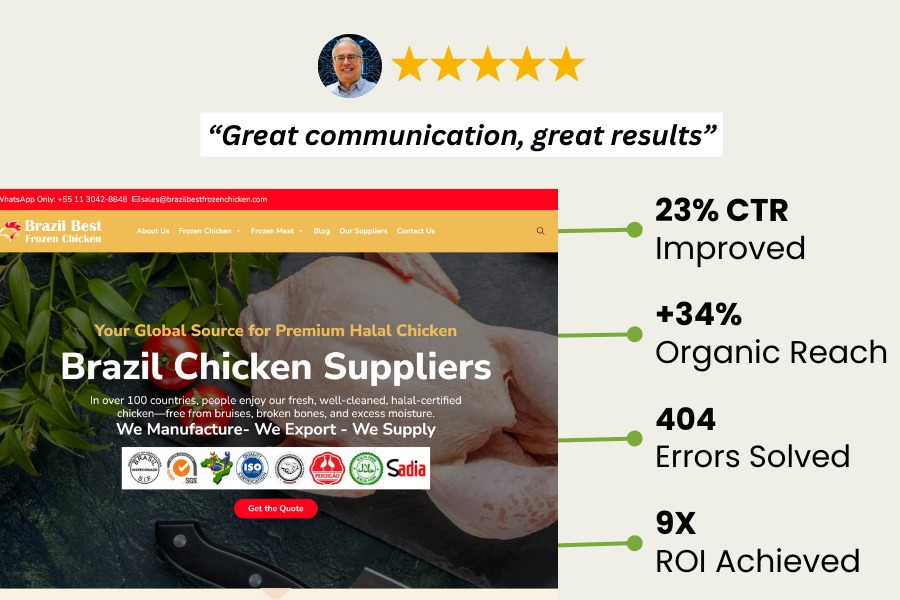
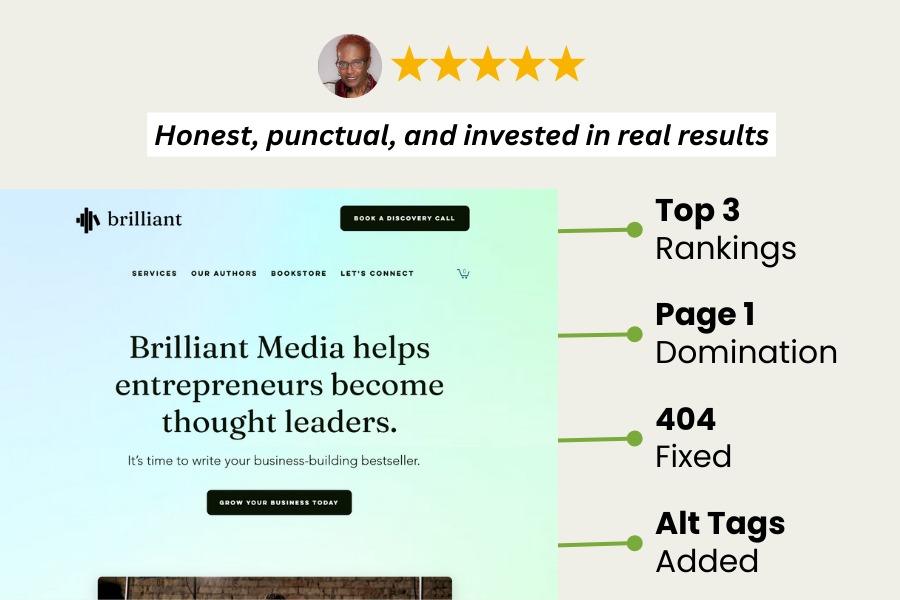
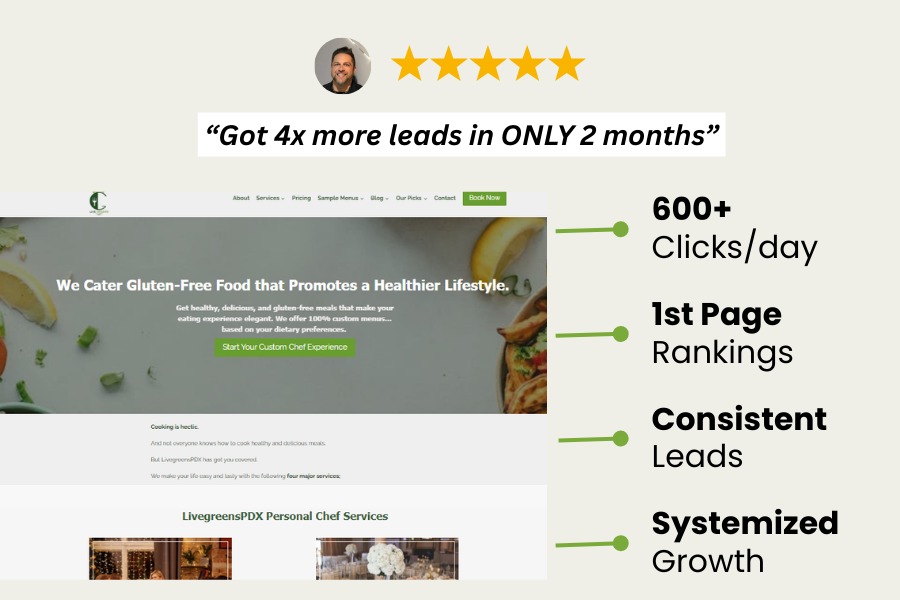
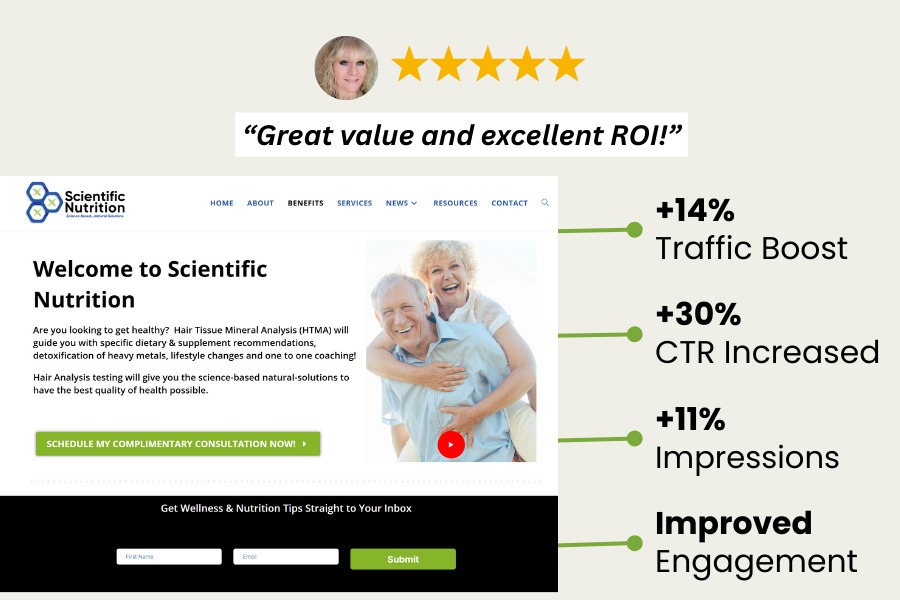
We brought a dead B2B website back to life, and added 9x ROI… A B2B website with loads of content but no results. Flat traffic. No rankings. Definitely no leads. We scrapped it and rebuilt it the way it should be done, new design, proper SEO, real strategy. Now it’s a lead machine generating 9X return. And things changed in just under a month.We took a thought leader from page 5 to Google’s Page #01) A phenomenal thought leader with zero visibility online contacted us on LinkedIn. She had the expertise, but just needed individuals to actually rank her. We got her listed where her leads were looking, and guess what? Now she owns her niche on Google.We 4xd a personal chef revenue through organic traffic This personal chef was bleeding money on lead platforms such as Thumbtack. No website. No brand. Just constant fees. We created him a proper online presence from the ground up, and now his business books itself through Google search. No third parties involved whatsoever.
Who We Work With (Ecommerce Brands Sick of Burning Cash on Ads)
Every ecommerce model faces different SEO challenges. An ecommerce SEO company needs to understand your catalog size, margins, customer journey, and competitive niches. We work with:
D2C Brands
Dropshipping Stores
Wholesale & B2B
Subscription Boxes
Health & Beauty
Marketplaces & Multi-Vendor
Electronics & Tech
Handmade & Artisan
Fashion & Apparel
Do you have a unique niche and want to discuss with us?
Why You Should Choose Saiqic for Your E-commerce Brand
We’re an e-commerce SEO agency that understands product margins, customer acquisition costs, and why organic channel diversification matters when iOS updates destroy your Facebook ROAS.
You Get a Strategy Based on Revenue Impact
Ranking for high-volume keywords feels good until you realize they don’t convert. We analyze your product margins, historical conversion data, and customer behavior to prioritize the keywords that actually drive profitable sales. Sometimes a 200-search-volume keyword converts at 8% and has better ROI than a 10K-volume vanity term.
We Build for Google and AI Product Discovery
Shoppers use ChatGPT, Gemini, and Google AI Overviews to research products before they buy. We build the content depth, structured data, and topical authority that make your store appear in those surfaces alongside traditional organic results. Most e-commerce SEO is still built exclusively for Google.
We Scale Optimization Across Your Entire Catalog
Manual optimization of every product page is not possible at scale. We build systematic frameworks: templated content structures, bulk schema deployment, automated internal linking, and programmatic optimization that maintains quality across thousands of products. Your entire catalog gets the optimization it needs without the manual effort that would make it impractical.
We Build SEO Around Your Business Operations
New product launches get immediate optimization. Discontinued products get proper redirects before they create crawl issues. Seasonal categories get content updates ahead of the demand surge, not after it. Promotional periods get SEO treatment that compounds the paid traffic investment. SEO that integrates with how you actually run your store rather than operating as a separate workstream disconnected from your business calendar.
We Fix the Technical Problems That Matter Most
Duplicate URLs from faceted navigation are consuming crawl budget. Products buried six clicks deep are getting crawled once a month. Redirect chains from previous migrations are bleeding link equity. These technical problems suppress organic performance regardless of how well individual pages are optimized. We fix the foundation before building on top of it because optimizing a broken technical structure yields nothing.
What We Need From You to Develop a High-Level SEO Strategy for Your e-Commerce
To get started we need few things that will help us do your eCom SEO efficiently.
The Real Reasons The E-commerce Store Gets Zero Organic Traffic
These problems appear on almost every e-commerce site we audit. They are rarely visible in day-to-day store operations. They show up in organic traffic trends and revenue attribution reports.
Product Pages With Manufacturer Descriptions That Every Competitor Also Has
Identical product descriptions across dozens of competing stores is one of the most widespread content problems in e-commerce. Google cannot determine which version to rank, so it ranks none of them well. Shoppers scanning product pages cannot tell which store understands the product better or which one serves their specific use case. Original, benefit-focused product content that speaks to how customers actually search when they are ready to buy is what separates product pages that rank and convert from ones that do neither.
Category Pages Treated as Navigation Rather Than Content Assets
Category and collection pages are typically the most valuable for organic traffic on an e-commerce site. They target the high-volume, high-intent searches shoppers make at the beginning of a buying decision. Most category pages have a page title, a filter bar, and a product grid with nothing else. No content establishes topical authority. No buyer guidance. No FAQ content answers the questions shoppers ask before committing to a category. These pages consistently underperform their potential because they are built for navigation rather than search visibility.
Faceted Navigation Generating Thousands of Duplicate URLs
Filter combinations…color, size, price range, material…each create a new URL on most e-commerce platforms. A catalog of 500 products with ten filter options can generate tens of thousands of unique URLs containing near-identical content. Google crawls all of them, identifies the duplication, and downgrades domain quality signals across every page on the site, including the ones that should be ranking. Crawl budget gets consumed on filter variations that should never be indexed. The product and category pages worth ranking get crawled less frequently as a result.
Site Architecture That Buries Products Too Deep for Google to Prioritize
Products sitting four, five, or six clicks from the homepage receive significantly less crawl attention and link equity than products at two or three clicks. On large e-commerce sites with poorly planned category hierarchies, a significant portion of the catalog effectively disappears from Google’s regular crawl cycle. These products do not rank because Google rarely visits them, not because the products themselves are unoptimizable. Information architecture that keeps important products within a shallow click depth is a foundational requirement that most e-commerce sites never address properly.
No Presence in AI-Generated Product Recommendations and Comparisons
Shoppers ask ChatGPT to recommend the best option in a category before they search for a specific product. They ask Gemini to compare two products they are considering. They encounter AI Overviews at the top of product category searches that pull directly from content Google has assessed as authoritative and trustworthy. E-commerce stores with thin product descriptions, no comparison content, no buyer’s guide depth, and weak structured data are completely absent from these surfaces. The stores’ building genuine topical authority and content depth appears in them and captures purchase intent at the earliest stage of the buying decision.
Content Strategy Built Around Traffic Rather Than Purchase Intent
Publishing blog content that generates high traffic from informational searches feels productive until the revenue attribution report shows that traffic converts at a fraction of a percent. Informational content has its place in an e-commerce content strategy. But the highest-value content targets the specific questions shoppers ask when they are close to a purchase: comparisons between specific products, guides for specific use cases, and content that answers the objections holding a ready-to-buy shopper back from committing. Most e-commerce content strategies optimize for traffic volume rather than traffic intent and produce analytics numbers that look good and a revenue impact that does not.
Are You A Saiqic Fit For E-Commerce SEO
We can help you if you;
Have Traffic That Does Not Convert
You have organic visitors, but they are not buying. The problem is almost always an intent mismatch: content attracts researchers rather than purchase-ready shoppers. Fixing keyword targeting and content intent alignment produces revenue impact without needing more traffic.
Have Good Store But Broken Foundation
Your store looks fine in a browser. But faceted navigation has generated duplicate URLs, important products are buried deep in the architecture, and crawl budget is wasted on pages that should never be indexed. Rankings suffer regardless of content quality.
Are Done depending on Paid Ads
Paid social costs keep rising, and iOS attribution keeps shrinking your measurable ROAS. You need an organic channel that does not stop when the budget does. The store’s building is now a compound that has an advantage over every competitor still waiting.
The Saiqic Process To Turn Your Dead E-com Store To revenue Generating Mchine
You’re not buying promises. Here’s exactly how we transform underperforming ecommerce sites into organic growth machines:
Store and Market Discovery
We learn your catalog structure, business model, highest-priority products, competitive landscape, and how your customers research and buy in your category.
Technical and Content Audit
We audit technical health, site architecture, product and category content quality, and AI search visibility. You get a prioritized diagnosis ranked by revenue impact.
Revenue-Intent Keyword Mapping
We identify the purchase-intent keywords your ideal customers use at every stage of the buying decision and map your entire content and optimization strategy around those terms and the conversion goals they serve.
Technical Foundation
We fix architecture issues, duplicate content problems, crawl budget waste, and structured data gaps before building optimization on top of them. Clean technical foundation first.
Content Optimization
We optimize product pages, transform category pages into content assets, and build the topical authority content that feeds shoppers into your catalog with purchase intent already established.
Ongoing Optimization
We monitor organic revenue attribution, ranking movement for priority keywords and AI search visibility. We refine the strategy monthly based on what is driving profitable sales and what needs adjustment.
You Might Have These Questions Related To Our e-Commerce SEO
Yes. Large catalogs are exactly what programmatic SEO frameworks solve. We build templated optimization systems, bulk schema deployment, and automated internal linking structures that maintain quality across thousands of products simultaneously. The approach scales with your catalog rather than requiring proportionally more manual effort as the catalog grows.
Yes. Platform matters less than most store owners assume. The fundamental SEO strategy stays consistent across platforms. Implementation details vary, but we have worked with every major e-commerce platform and a range of custom builds. We adapt to your platform rather than requiring you to change it.
Directly. Shoppers use ChatGPT and Gemini to compare products and get buying recommendations before they visit a store. AI Overviews appear at the top of product category searches and pull from content Google has assessed as authoritative. Stores with genuine content depth, proper structured data, and established topical authority in their category appear in those surfaces. Stores with thin product descriptions and weak content do not.
Technical fixes and product page optimizations typically produce crawl and indexation improvements within 4 to 8 weeks. Ranking movement for target product and category keywords typically appears within 8 to 16 weeks depending on competition level and domain authority. Content that builds topical authority compounds over 3 to 6 months. Revenue attribution from organic traffic becomes measurable as rankings and conversion signals improve together.
Technical health covering crawlability, indexation, site architecture, duplicate content, and Core Web Vitals. Content quality assessment for product and category pages. Keyword opportunity and intent mapping. Competitor gap analysis. Backlink profile review. AI search visibility evaluation. Prioritized action plan ranked by expected revenue impact rather than volume of issues found.

Your E-commerce Store Deserves SEO That Generates Revenue
Most e-commerce SEO services are delivered by agencies that have never run an online store, managed inventory, worried about COGS, or understood why customer acquisition cost matters more than traffic volume.
But you’re not trying to impress other marketers with those numbers. You’re trying to build a sustainable, profitable business that doesn’t collapse when Facebook ad costs spike.
And that’s where Saiqic helps you grow your store’s sales.