
Every dollar you put into SEO is a bet. And the difference between a bet that pays off and one that drains your budget comes down to who you hire. You get proposals that look polished, you hop on a call, and they walk you through a plan that sounds solid, you ask questions, and they have all the right answers. The problem is that none of that tells you how well they actually deliver.
Because the SEO industry has no universal standard and no real accountability system. Anyone can call themselves an expert and start taking your $$$ monthly. By the time you realize the work is not delivering, you have already paid for months of it.
So, before you sign anything, here is exactly what you need to look at to make sure your money goes to the right place.
Before You Talk to Any Agency, Get Clear on What You Actually Need
Local SEO, e-commerce SEO, national SEO, content writing, PR writing…all are completely different. Each solves a different problem. If you go to an agency without clarity, they will naturally guide you toward whatever services they already sell.
That means the strategy may fit their packages, not your business goals. So first, define your objective. Do you want more local leads (local SEO)? More online sales for your store (e-com SEO)? More authority (PR writing)?
Get clarity on what.
Know Exactly Where Your Site Stands Right Now
If you’re just starting a website or need one from scratch, this does not apply to you. But if you have a website with some pages and posts, then before hiring an SEO content agency, understand your current position. Check your traffic, keyword rankings, technical SEO health, and backlink profile. No, you don’t need to be an SEO expert to do this. Just get the basic information from a tool like SEMrush.
Without it, you can’t measure real progress, and you won’t know whether the agency is actually improving your business or just sending reports.
You Should Know Your Core Keywords and What They Are Worth
You don’t need to be technical. You don’t need to understand SEO tools or data dashboards. But you should at least know the main phrases your ideal prospects use when they are ready to buy from you.
Some keywords have clear buying intent. Others only bring curious visitors. If you do not understand this difference, you cannot properly judge whether the agency’s strategy is aligned with revenue or simply generating traffic that looks good on reports but does not convert.
Know Your Objective/End-goals From SEO Content
Be clear about what results actually matter to you: calls, form submissions, booked appointments, purchases, or sign-ups. The entire SEO and content approach depends on it. So if an agency never asksabout your business objectives or what action truly matters to you, they are not building a strategy around your business. They are just applying a generic SEO plan.
Warning Signs/Red Flags You Should Not Ignore (& Run If You Spot Any)
Some problems show up early. If you know what to look for, you can avoid months of wasted budget and frustration.
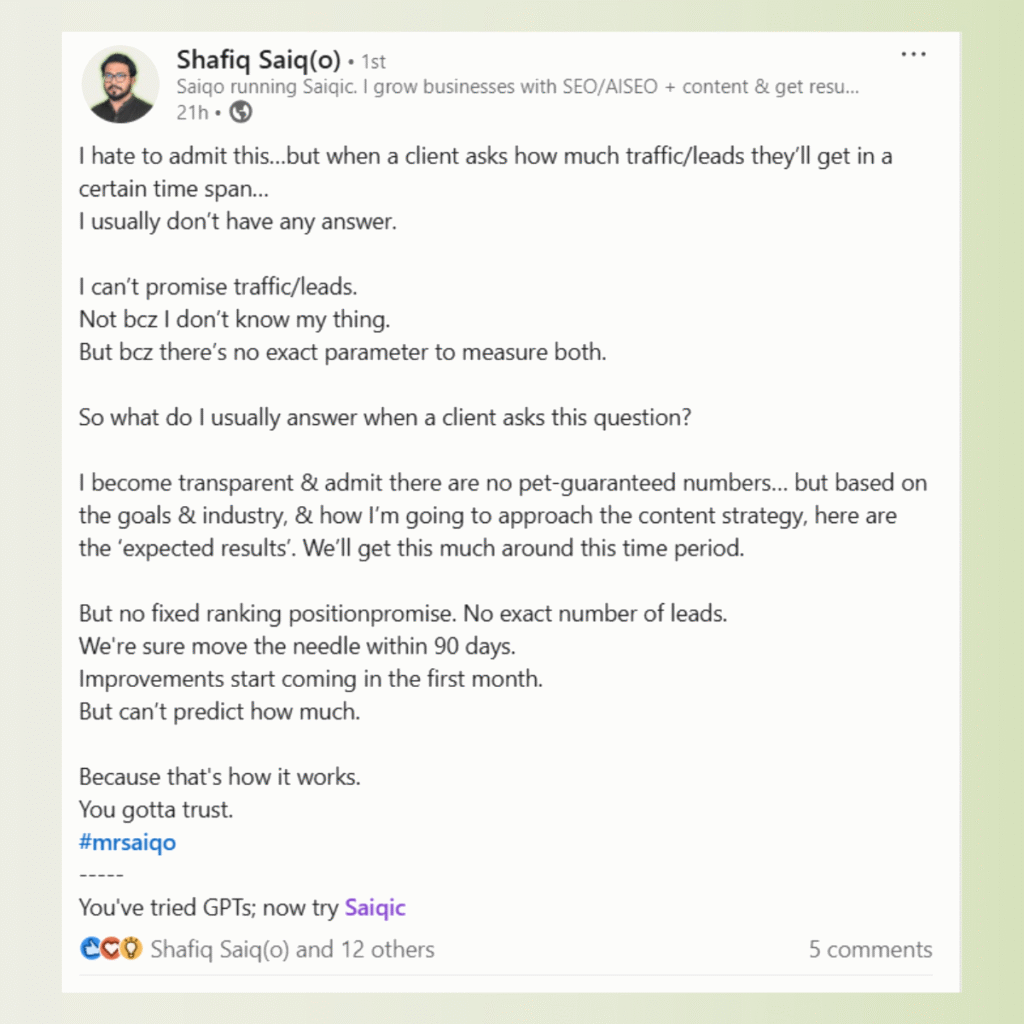
The Agency is guaranteeing You Page #1 Rankings
No one can guarantee a specific ranking. If an agency is guaranteeing page 1 rankings, they are either misleading you or selling something they cannot control. Rankings depend on competition, algorithm updates, and dozens of external factors.
What a serious agency can commit to is measurable improvement: better visibility, stronger traffic quality, more qualified leads, more calls, more inquiries. They can guarantee work, strategy, and progress. They cannot guarantee a fixed position on Google.
The Contract Has No Real Scope of Work
You sign the contract, a month passes, and when you ask what got done, the answer is “ongoing SEO.” That is not a deliverable.
If the agency cannot clearly specify in writing what will be completed each month, you have no way to measure progress or hold them accountable. Ask for defined and documented deliverables on a monthly basis.
They Push for a Long-Term Lock-In Before Proving Anything
Be cautious when an agency pushes for a 12-month commitment before delivering any real work. Long-term partnerships are okay, but in the beginning, do not commit beyond 3 months.
Let them prove progress, show measurable improvement, and build trust first. If they insist on an extended lock-in upfront without proving their capability, you have to question whether they are protecting your results or simply securing their own retention.
They don’t Prioritise Technical SEO
If the agency doesn’t discuss technical issues such as crawl errors, site speed, Core Web Vitals, schema markup, or redirect chains during the first call or initial audit. It’s a clear sign they aren’t looking at your site as a whole. If they ignore these foundational elements, their rankings are unlikely to last.
You Cannot Meet the Actual Team Before Signing
If you are not directly connected to the people actually doing the work, there will be gaps in communication and added uncertainty. Without speaking to the real strategist, writer, or technical SEO expert before signing, you’re essentially paying for a brand name, not the service itself.
They Use “SEO Takes Time” to Cover Up Inactivity
SEO does take time. But that is not a justification for zero visible progress in the first 60 days. You should see an audit, a content plan, technical fixes in motion, and a complete strategy moving early on.
What Questions Should You Ask Before Signing with an SEO Agency?
Before you sign that contract, make sure you know exactly who will handle your website, what work will be done, and how they will measure results. Asking the right questions upfront prevents miscommunication, hidden handoffs, and paying for a brand name instead of real service.
What exactly does our account receive every month?
Get everything in writing before you sign. Ask for a clear list of monthly deliverables, who is responsible for each task, and the deadline for each deliverable. Any uncertainty at this stage is a strong indicator of how every month will feel once you’re a paying client.
What do the first 30, 60, and 90 days look like?
A real agency walks you through this clearly before the engagement starts. You should know when you get the detailed audit, what it covers, when the first optimizations go live, and when content starts publishing. If they cannot answer this before you sign, they will not deliver it after.
Who specifically works on our website day to day?
Get names and roles. Ask whether a senior strategist or a junior coordinator owns your website, and ask how many other clients that person is managing at the same time.
Can we speak with the SEO strategist, content writer, and technical SEO before we start?
This one question immediately filters out most bad agencies. If you get a deflection or “we will introduce the team after onboarding,” you are about to enter a model in which your work is passed down a chain of people who have never spoken to you.
How do you approach GEO and AISEO?
Search behaviour is shifting. People are now getting answers directly from AI tools like ChatGPT, Perplexity, and Google’s AI Overviews without clicking through to websites. Ask the agency how they are adapting content strategy to stay visible in llms. If they have no answer or have never thought about it, they are already behind.
What does your content process look like?
Ask who writes it, what the research involves, and whether any of it is AI-generated without proper human review. Content quality determines SEO performance right now and you need to know exactly how they are doing it before committing.
What on-page work do you handle completely, and where do I need to get involved?
Some agencies charge full retainer rates and quietly push implementation back onto the client. Clarify this upfront so you are not two months in wondering why you are doing the work yourself.
Will we have direct access to live dashboards?
You should be able to check your own data at any time without waiting for the monthly PDF that the agency sends you. This is non-negotiable!
How does your strategy contribute to revenue, not just rankings?
Ask how the agency ties the content to leads, conversions, and actual business outcomes. If they cannot answer this clearly, they are tracking their own activity.
How do you handle a Google algorithm update that hurts our site?
Every agency says they are proactive. Ask what that actually looks like: how fast they respond, what the recovery process involves, and what they have done for other clients in similar situations.
Can you share previous case studies or similar sucessful projects examples?
Ask them to share their case studies or their recent successful projects. A legit agency always has proof of work. You can read case studies all day. A direct conversation with a past or current client tells you more in ten minutes than any polished deck they control. If they hesitate here, there is something wrong with the service or the process.
Walk me through a case study where results took longer than expected.
You learn far more from how an agency handles difficulty than from its highlight reel. An agency that can talk honestly about a tough situation and how they managed it is worth listening to.
What happens if we want to pause or exit?
It’s really important to know exit terms before you sign anything. A fair agency makes leaving straightforward if things are not working. A problematic one makes it painful for you.
Is all the work handled by the team/agency, or is any part outsourced?
Some agencies outsource work such as content creation, design, or technical SEO without being transparent about it. If they do, make sure to ask who is handling it and how they maintain quality standards for the work you are paying for.
Above Everything, The Content Writing Agency Should Be Reliable & Responsive
You’re going to handover one of the most efficient growth channels (your website) to an agency. So they must be reliable and responsive. And I have seen that in the larger/established agencies, most basic things go wrong.
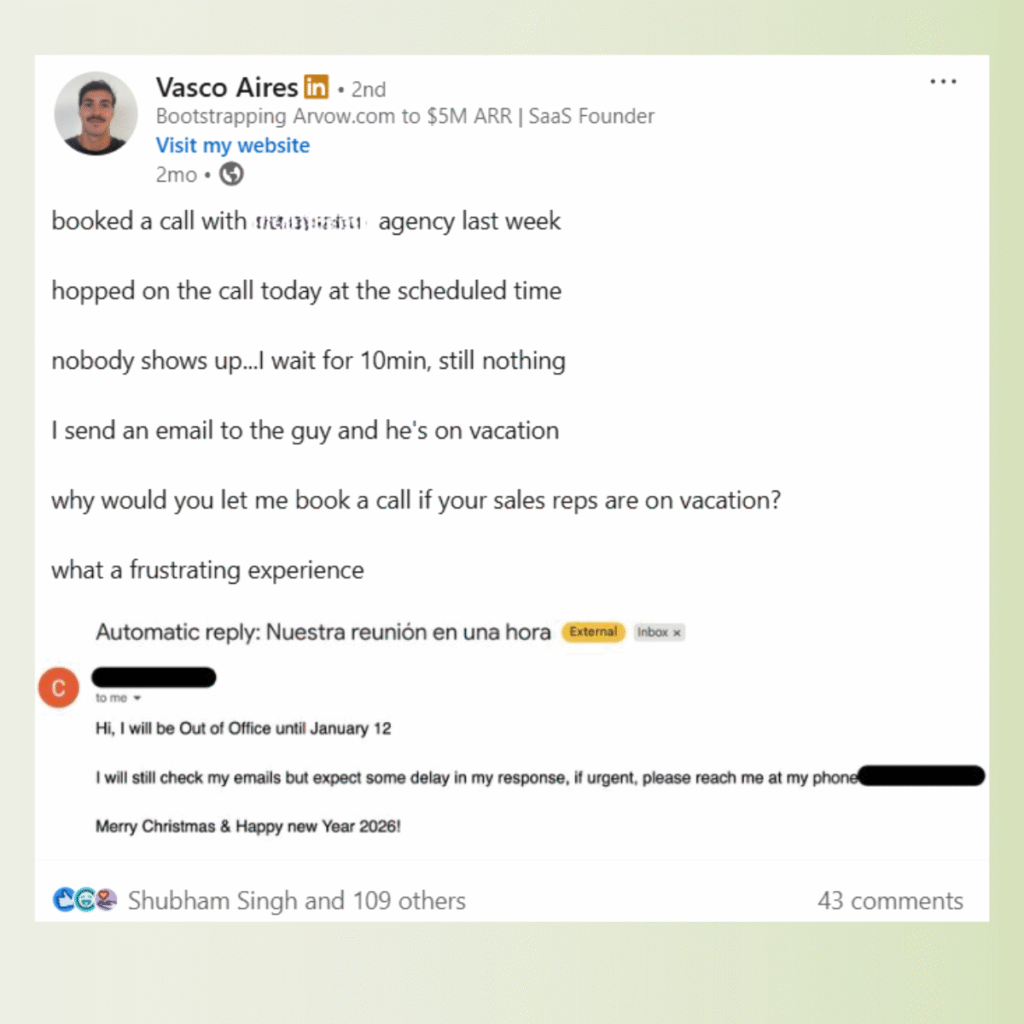
You schedule a call, and the person who was supposed to show up is on vacation. You send a question, and it bounces through three inboxes before anyone responds. That is before the actual work even starts.
The structure looks like this: your account manager takes your brief, passes it to a project coordinator, who passes it to a junior SEO, who then passes it to a content writer who has never spoken to you. Your goals, brand voice, and business context get diluted at every single step. And when you get content, it barely resembles what you asked for.
Smaller, focused teams like Saiqic work completely differently. The people actually doing the work talk to you directly. The SEO strategist understands your goals, the content writer understands your brand, and nothing gets lost in the process because there is no chain to pass things through. What you discuss is what gets built.
What a Good Agency Actually Looks Like
- They run a real audit before making any promises and walk you through the findings with a clear plan attached to it.
- They explain strategy in plain language and connect every activity to a business outcome.
- They define KPIs before work begins, and those KPIs connect to leads, conversions, and revenue.
- Their reporting shows keyword movement by page, traffic quality, and conversion trends.
- They adapt strategy as data comes in instead of executing a rigid plan regardless of what the numbers are saying.
- They communicate before you have to chase them. When you ask hard questions, they answer directly. If an agency gets defensive when challenged before you even sign, that defensiveness only grows once you are a paying client.
How Much Should You Realistically Budget for SEO When Working with an Agency?
The pricing depends on your goals and needs. If it’s a competitive niche and more work is needed, the quote will be higher. If you have a niche site, you’ll need less money to build a solid organic presence.
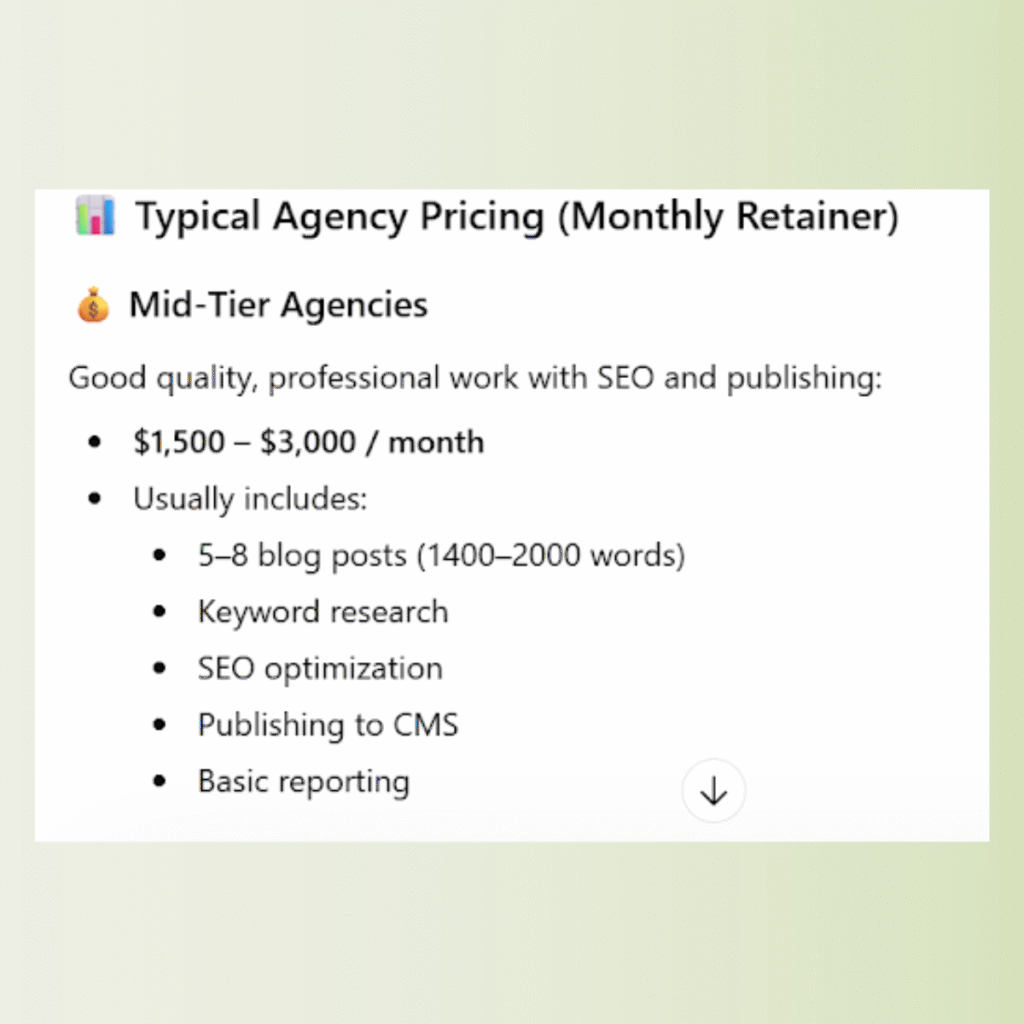
But you should NEVER chase cheap SEO work. I’m NOT being biased here. Our team has worked with generous clients, and we’ve faced greedy clients who haggle the price to bottom-dime. If you hire someone at $500/month, when the service is actually worth $1500/month, you’ll waste your 500 bucks. There’s a difference between spending and investing. You should always be investing, NOT spending.
Every agency has its own different pricing strategy & packages. And if the agency is able to make sense of what they’re charging, go for it. You get the value-for-money. If the agency can’t justify the pricing with the value they’re providing, you’ll sense it.
You should also know that there’s a difference between a $10 blog post and a $100 blog post on the same topic. You can always get an estimate of the average market price for the services you need. Like how I just asked GPT for the average price range;
One Last Thing Before You Decide To Hire An SEO Content Agency
How Transparent Are They About Risks and Limitations?
Most agencies focus on promises, results, and deliverables but very few talk openly about what could go wrong. SEO isn’t risk-free: algorithm updates, competitor moves, or even technical issues on your site can set progress back.
A strong agency will be upfront about these risks, explain how they manage them, and outline realistic scenarios for delays or setbacks. They will tell you what’s likely to work, what could fail, and how they plan to respond if it does.
If an agency only sells guarantees and smooth timelines without discussing potential challenges, they are either overconfident or hiding problems. Transparency about risks shows expertise, honesty, and a true partnership mindset.
Saiqic meets all the standards outlined in this guide and welcomes every question you have before making a decision. If you want a clear assessment of your site and what it truly needs, let’s hop on a free 30-minute call.
